A car’s paintwork is truly clean when contaminants are dissolved gently, thoroughly rinsed away, and the surface is subsequently protected. What matters is a structured hand wash, suitable cleaning products, and clean tools. Only then can dirt be removed without causing new paint defects.
A clean paint surface is free from visible dirt, invisible deposits, and mechanical residues – without damaging the paint. It therefore forms the ideal basis for subsequent polishing or sealing with car wax.
Why is that?
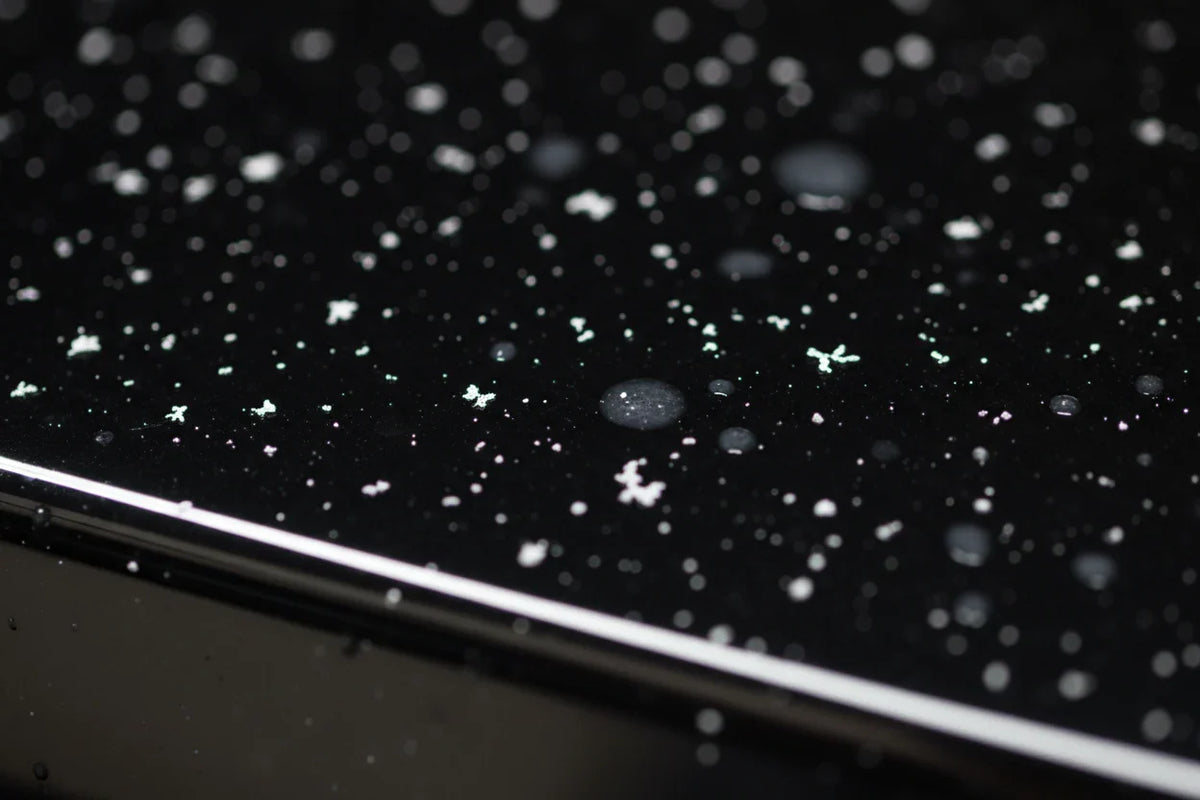
Modern automotive paints are more sensitive than many assume. Fine dust, road grime, insect remains, or industrial fallout often adhere more strongly than is visually apparent. Quick cleanings or automatic car washes remove coarse dirt, but frequently leave residues or create fine micro-scratches.
Truly clean paint is achieved not through force, but through control. pH-neutral cleaning products, sufficient water, and a clear process ensure that dirt particles are loosened and safely transported away from the paint. Those who understand this process preserve substance, gloss, and value.
When which solution makes sense
- If the paint is only lightly soiled, a thorough hand wash followed by drying is sufficient to remove dust, pollen, and road grime.
- If insect remains, tar, or rail dust appear, targeted pre-cleaning before the actual wash is advisable.
- If the paint looks dull, after cleaning, a treatment, hand or machine polishing, and subsequent sealing with car wax will help restore smoothness and depth.
- If the paint is maintained regularly, less aggressive steps are required, as dirt adheres less easily.
Step by step: How to make the paint truly clean
1. Preparation
Work in the shade and on cool paint. Rinse the vehicle thoroughly to remove loose dirt. The more particles are removed beforehand, the lower the risk of scratches.
2. Hand wash
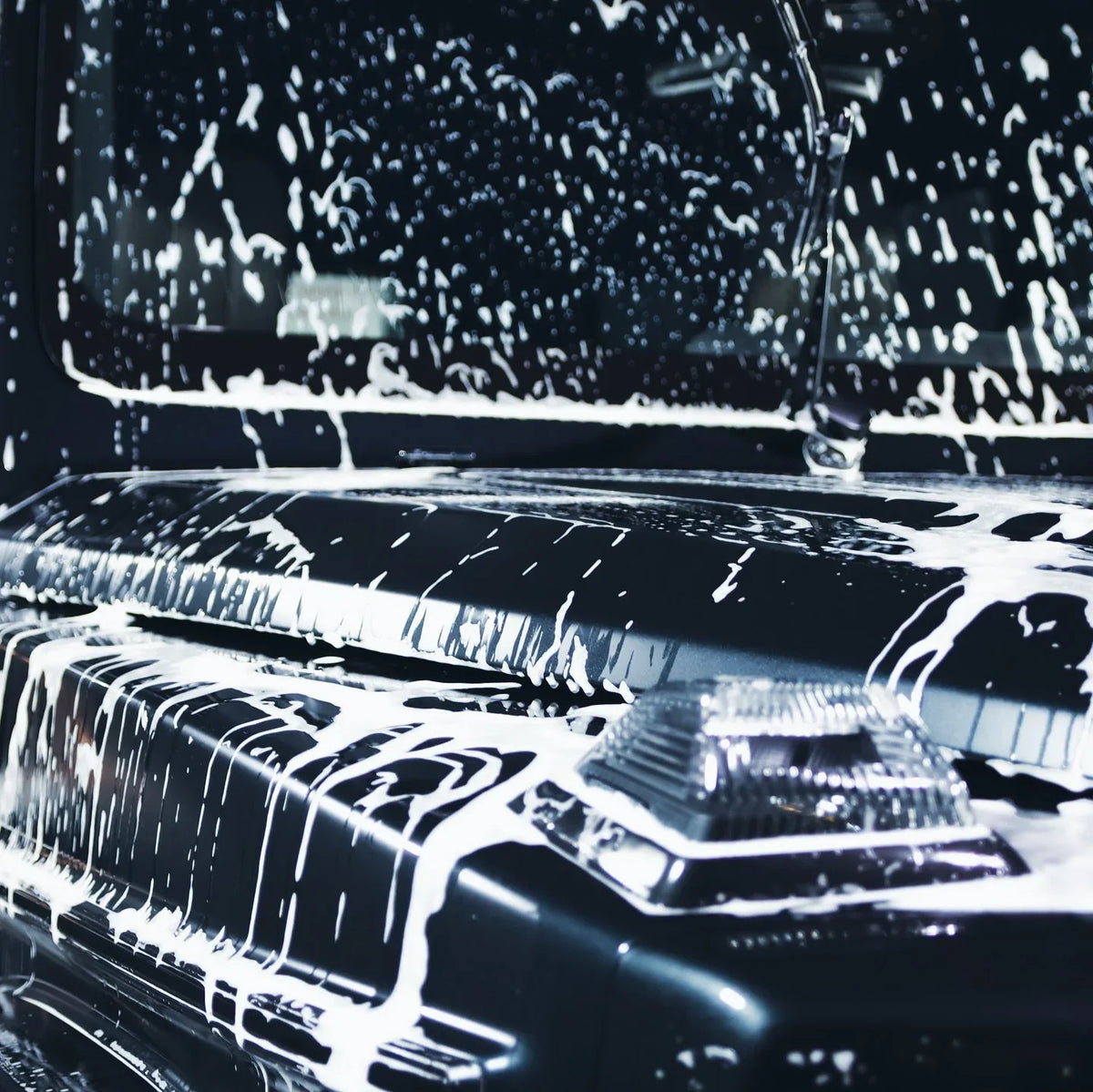
Use a high-quality car shampoo and clean washing utensils. Wash from top to bottom and rinse regularly. Two buckets are standard: one for the shampoo, one for rinsing out the wash pad.
3. Thorough rinsing
Remove all shampoo residues completely. Leftovers can cause streaks and impair subsequent care.
4. Drying
Dry the paint with a clean, soft drying towel. Work without pressure, blotting or pulling evenly, to avoid new micro-scratches.
5. Care and protection
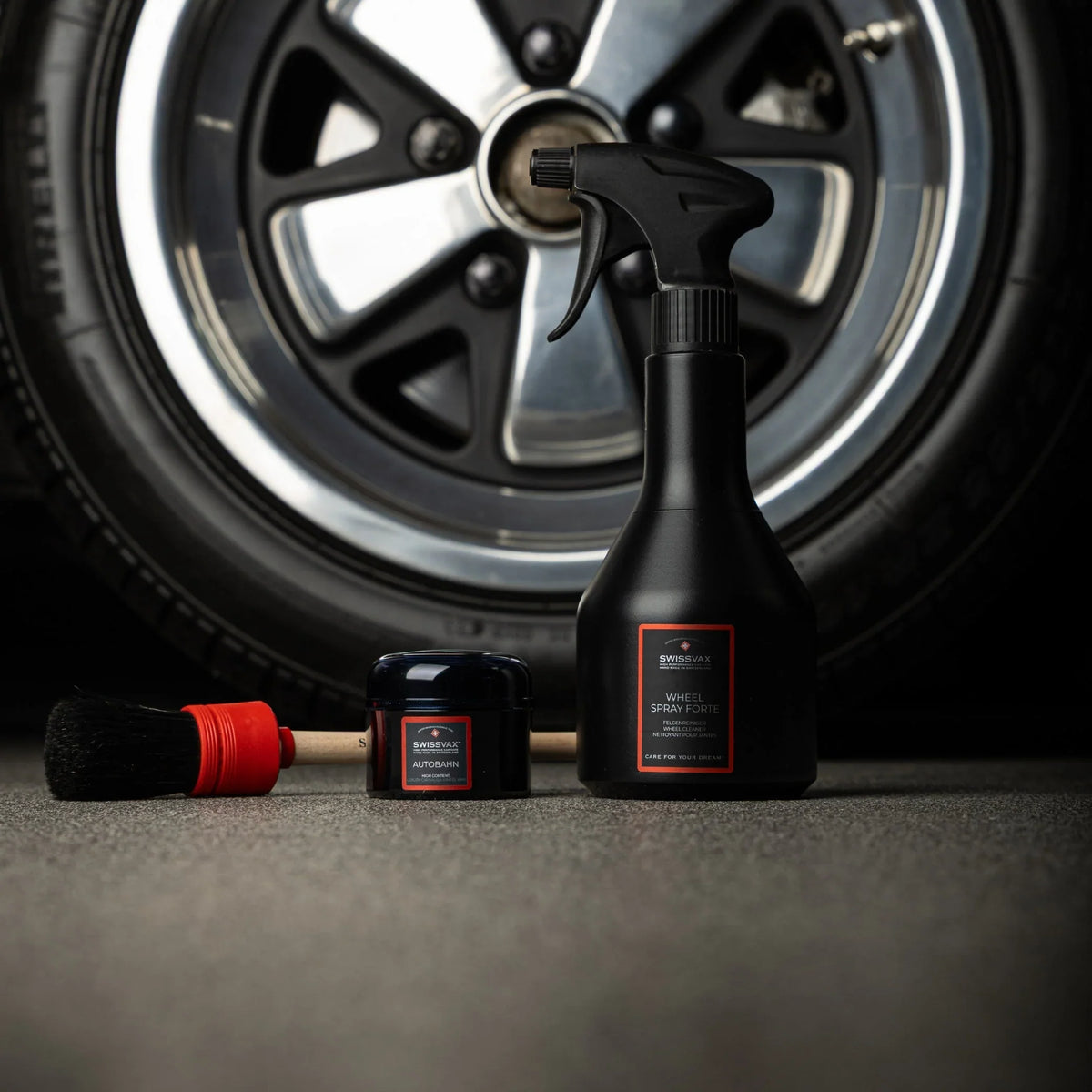
After cleaning, applying suitable paint care or a sealant is recommended. It facilitates future washes and ensures that the paint remains clean longer. Suitable products can be found in the Swissvax car care collection. Whether the paint needs to be polished (by hand or machine) depends on the scratches and the level of gloss.
Common mistakes & myths
- “More pressure cleans better”: Incorrect. Pressure creates scratches, not cleanliness.
- “One product for everything”: All-in-one solutions are convenient but always a compromise. In the medium and long term, such products often cause more harm and waste time.
- “The car wash is sufficient”: For quick cleanliness yes, for well-maintained paint no. Every automatic car wash creates scratches and micro-scratches in which dirt adheres more easily, making the paint appear dull and neglected more quickly.
- “Drying is optional”: Water spots form faster than many think. And limescale spots can only be removed by polishing – therefore they must be consistently avoided.
Professional tip from practice
It is better to work regularly and gently than rarely and aggressively. Well-maintained paint is easier to clean and remains permanently more attractive – especially during the transitional seasons of spring and autumn.
Frequently asked questions
How often should car paint be cleaned?
Every one to two weeks, depending on use and weather conditions.
Is pre-washing really necessary?
Yes. It significantly reduces the risk of scratches.
Can household cleaners be used?
No. They attack the paint and existing protective layers.
When is the best time to wash a car?
At mild temperatures without direct sunlight.
Conclusion
Truly clean car paint is achieved through system, not by chance. Those who wash in a structured way, use suitable products, and maintain regularly preserve gloss, substance, and value retention. Further guides and coordinated care products can be found directly at Swissvax here on the website.
Technically reviewed by SWISSVAX – specialized in professional vehicle care since 1930.